Mandala coloring pages
Start with a picture from this set (Intricate Flower Petal Mandala, Heart and Leaves Nature Mandala).
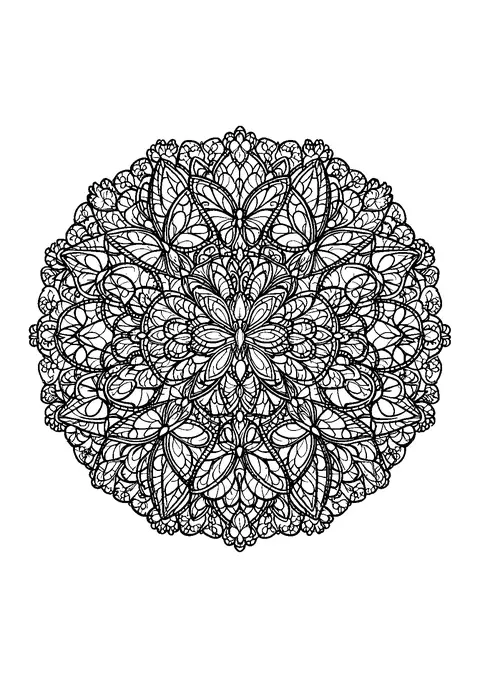
Beautiful Butterfly Wings Mandala
Detailed
Easy Star Mandala for Beginners
Simple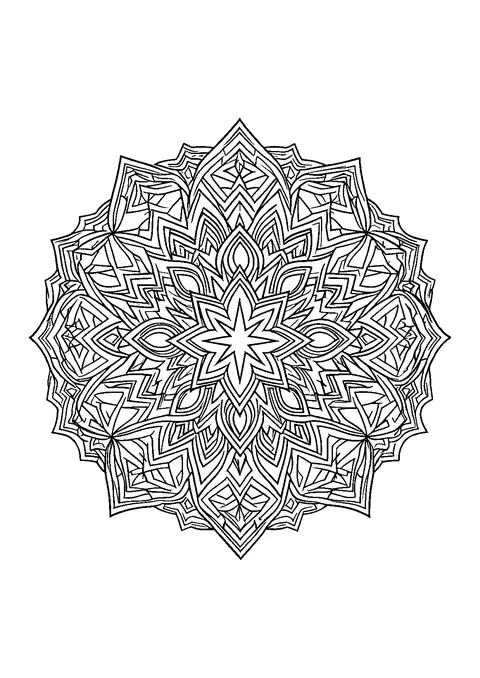
Geometric Star Mandala
Detailed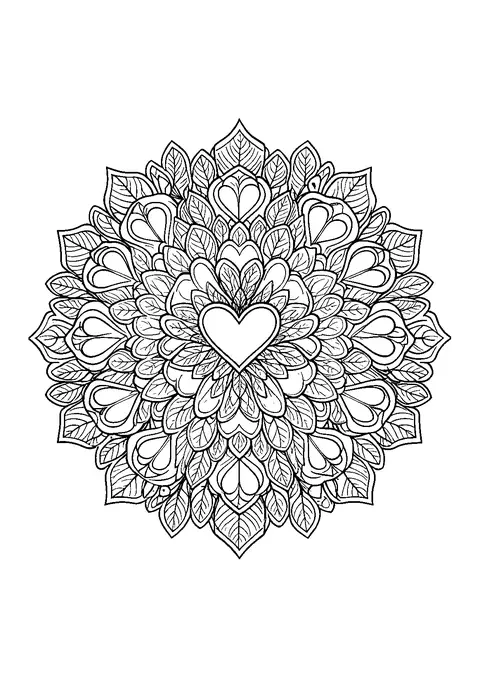
Heart and Leaves Nature Mandala
Detailed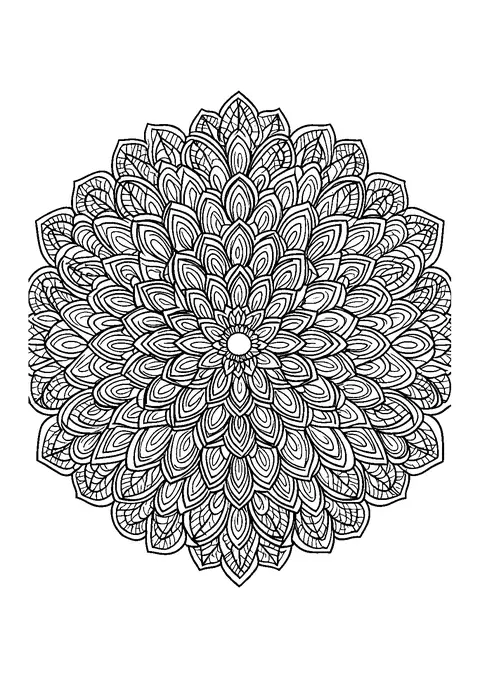
Intricate Flower Petal Mandala
Detailed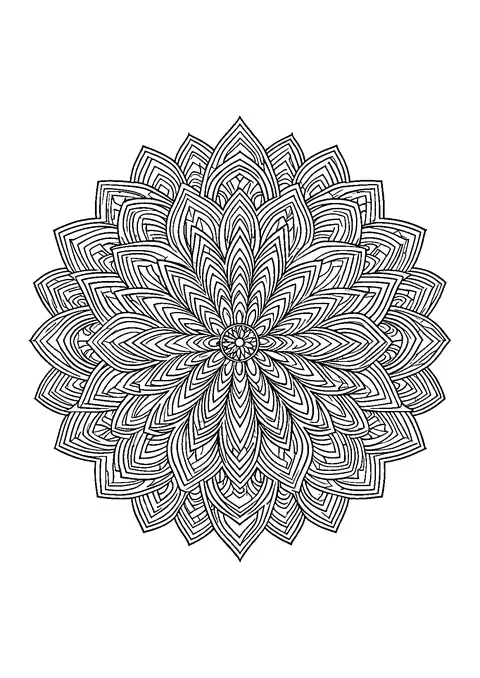
Tranquil Lotus Flower Mandala
Detailed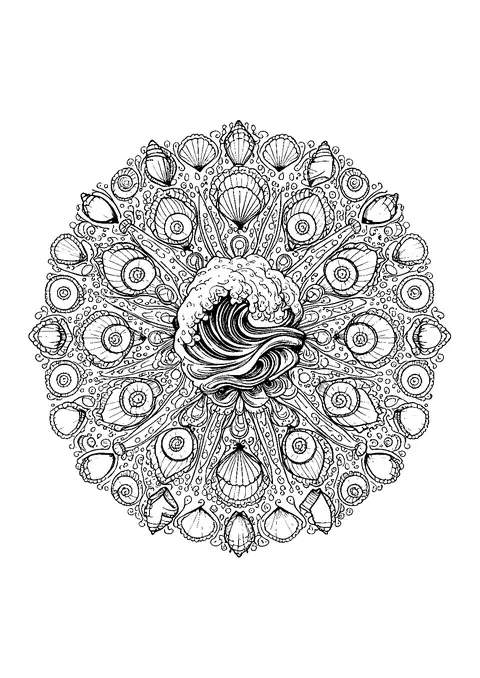
Ocean Waves and Shells Mandala
Detailed
Simple Shapes Mandala for Kids
Simple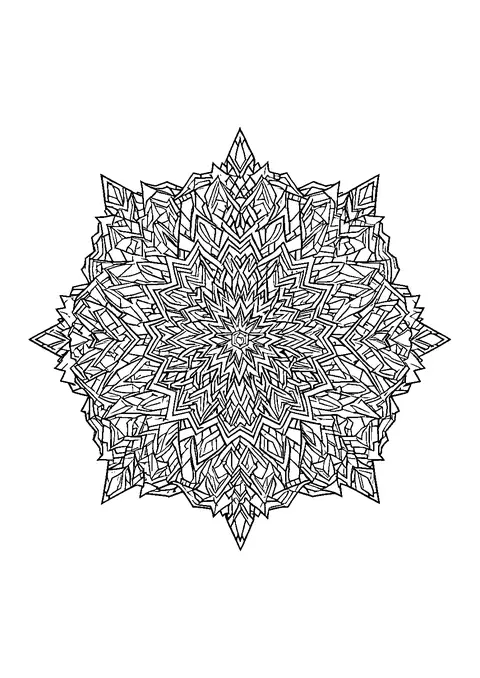
Symmetrical Snowflake Mandala
Detailed
Radiant Sun Mandala With Rays
DetailedTry these sheets
Intricate Flower Petal Mandala, Heart and Leaves Nature Mandala, Symmetrical Snowflake Mandala. Set the pages side by side and let the child pick a subject to work on. In a group, leave the selection open so children can compare different pictures on the same theme. Ask each child to describe what drew their eye first. An older child can turn that observation into a clue for a partner to guess the picture without seeing it.
Start in the center and follow one ring. Choose a color sequence, then predict what belongs in the next space before filling it. For a preschooler, look for wide areas that a thick crayon can follow. Small enclosed shapes give older children, or an adult working alongside them, room to try pencil textures. Set out a scrap of the same paper to test pressure before coloring the final picture.
Print or color on screen
For a US printer, choose the Letter PDF. Pick A4 when that matches the paper in the tray. Preview the whole outline, then print in black and white. On screen, use the fill for enclosed shapes and the brush for small marks. Save the finished picture as a PNG if you want to keep a digital copy.
FAQ
Which file should I print?
Choose the PDF whose page size matches your paper. Check the outer frame in print preview.
Can I change a color after filling a shape?
In the browser, undo the last action or use the eraser. Use the brush to add marks after filling an area.
What can a group do with the finished pages?
Start in the center and follow one ring. Choose a color sequence, then predict what belongs in the next space before filling it.